Parnashala, Telangana: The Other Claim to Sita's Abduction Site
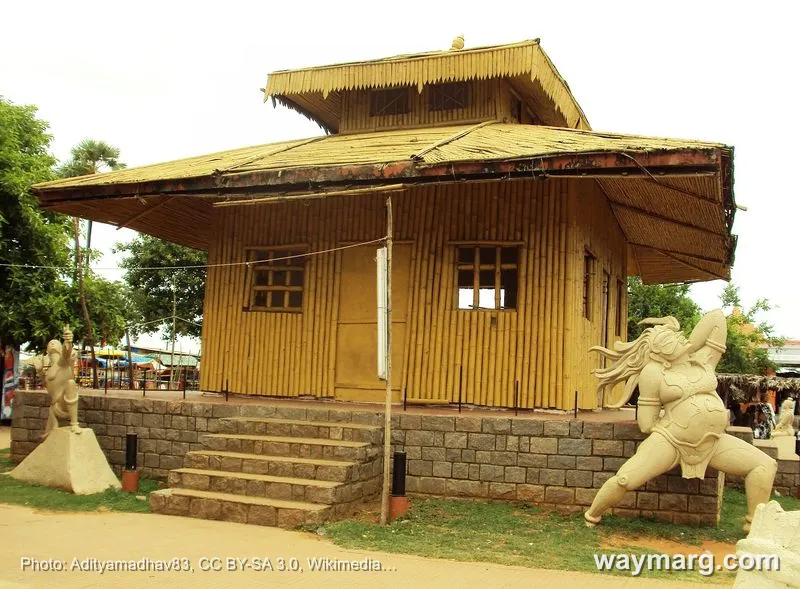
Parnashala's name translates simply to "leaf-hut," describing the modest dwelling Rama is said to have built here on the banks of the Godavari during the forest exile -- and this site, near Bhadrachalam in Telangana, holds its own distinct claim to being the exact spot of Sita's abduction, a few hundred kilometres from Panchavati's competing version of the same story.
As with every contested claim on this trail, WayMarg presents Parnashala as what it is: one of two sincerely held traditions, not a settled historical fact.
- State: Telangana, near Bhadrachalam, on the Godavari
- Meaning of name: "Leaf-hut" -- Rama's exile dwelling
- Best months: November–February
- Minimum time: 2–3 hours
- Suitable for: Pilgrims; geographically convenient to combine with a wider Bhadrachalam-area visit
A Dwelling, Not a Monument
What distinguishes Parnashala's story from many grander Ramayana sites is its deliberate modesty -- the legend centres on a simple leaf-and-thatch hut, not a palace or a temple, reflecting the exile's own circumstances. The site today preserves that character, with shrines marking the believed locations of the hut and the surrounding forest clearing.
The Rival Claim to Panchavati
Panchavati, in Nashik, Maharashtra, holds the better-known and more widely cited version of the same abduction story, built around its own set of five sacred banyan trees. Parnashala's claim is strongly held locally, particularly given its direct geographic proximity to the Godavari and to Bhadrachalam, one of the most significant Rama temples in South India.
Visiting
Parnashala sits close enough to Bhadrachalam to combine easily into a single trip along the Godavari, and the river crossing itself -- by boat, in season -- is part of the experience many visitors describe as the most memorable part of the stop.
Ready to plan your trip?
Build a day-by-day itinerary with WayMarg — explore routes, nearby food and stays, collaborate with family, and export your trip. No sign-up needed.
Explore the Ramayana Trail Guide →