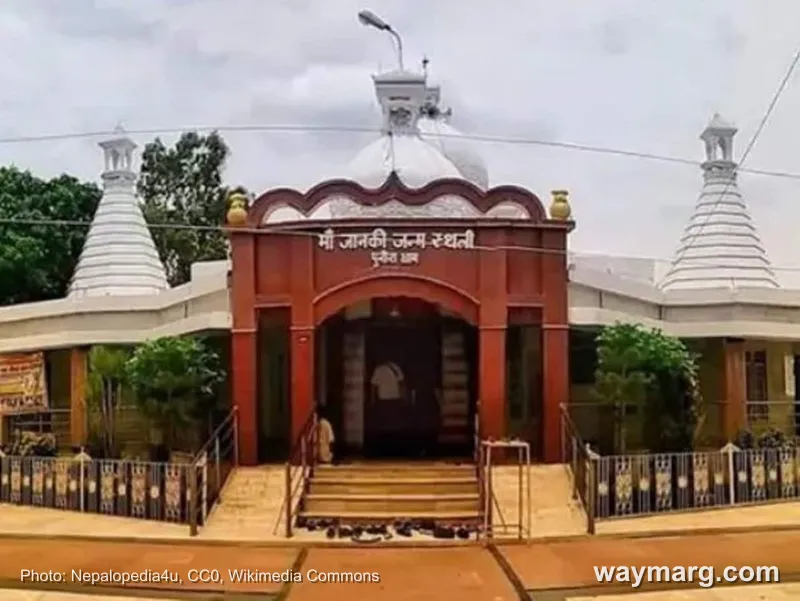
Sitamarhi, Bihar: The Indian Claim to Sita's Birthplace
Sitamarhi's name gives its claim away before you've read a single plaque: the town is literally named for Sita. Local tradition, centred on Punaura Dham a short distance from the town itself, holds that this is the exact field where King Janaka, plowing the earth during a yagna, found an infant girl lying in the furrow -- the child who would become Sita, and who takes her very name (from "sita," a plowed furrow) from the manner of her discovery.
This is the Indian claim to a question that doesn't have a single settled answer. Janakpur, across the border in Nepal, holds the competing and equally devoted claim, built around its own Janaki Mandir. Neither this page nor WayMarg takes a side -- both traditions are presented as what they are: two countries, two living claims, one shared figure.
- State: Bihar, on the Indo-Nepal border region
- Key site: Punaura Dham, near Sitamarhi town
- Best months: October–March
- Minimum time: 2–3 hours
- Suitable for: Pilgrims tracing Sita's birth story; combine with a wider Bihar/Mithila itinerary
Punaura Dham: The Furrow Itself
Punaura Dham is the specific site tradition points to -- a temple complex built around the believed spot of the furrow where Janaka's plow uncovered the infant Sita. It functions today as a modest but actively visited pilgrimage site, distinct from the town of Sitamarhi itself, a short distance away.
Two Countries, Two Claims
Janakpur's Janaki Mandir in Nepal is the far better-known and more architecturally grand of the two claims, and hosts the major Vivaha Panchami celebrations marking Rama and Sita's wedding. Sitamarhi's claim is older in local memory and carries the weight of the name itself, but has seen comparatively less development as a pilgrim destination. Both are sincerely held; this page doesn't adjudicate between them.
Visiting
Sitamarhi is accessible by rail and road from Patna and from the wider Mithila region. Punaura Dham sees its largest crowds around Ram Navami and Vivaha Panchami, when the Sita-birth and Sita-wedding stories are both being actively marked across the region.
Ready to plan your trip?
Build a day-by-day itinerary with WayMarg — explore routes, nearby food and stays, collaborate with family, and export your trip. No sign-up needed.
Explore the Ramayana Trail Guide →