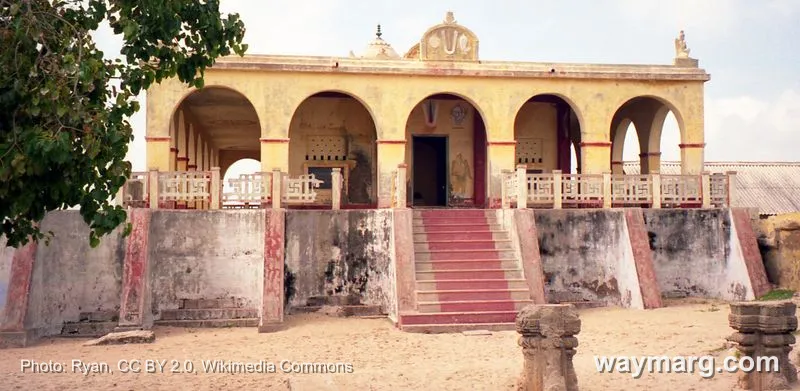
Kothandaramaswamy, Dhanushkodi: Where Vibhishana Was Crowned King of Lanka
After Ravana was slain, Rama performed the Pattabhishekam here at Kothandaramaswamy -- the formal coronation of Vibhishana, Ravana's own brother who had defected to Rama's side, as the new king of Lanka. The episode is painted across the shrine's inner walls, and this temple is the direct India-side counterpart to Kelaniya in Sri Lanka, which commemorates the very same coronation tradition from the other shore.
The temple carries a second, entirely different kind of significance: it was the only structure to survive the catastrophic 1964 Rameswaram cyclone, which otherwise devastated and depopulated the entire town of Dhanushkodi around it -- the ghost-town ruins of that former town, a railway station and church among them, remain visible nearby today.
- State: Tamil Nadu (Dhanushkodi, near Rameswaram)
- Key legend: Vibhishana's coronation as king of Lanka
- Age: Estimated 500–1,000 years old
- Minimum time: 45 minutes, plus time at the ghost-town ruins
- Suitable for: Pairing with Rameswaram and the Ram Setu/Adam's Bridge viewpoint
One of 108 Abhimana Kshethrams
The main idol depicts Rama holding his bow, or Kothandam, which gives the temple its name. It's counted among the 108 Abhimana Kshethrams of Vaishnavite tradition, and Swami Vivekananda is said to have visited after returning from his famous 1893 Chicago trip.
The Town That Didn't Survive
Dhanushkodi's former town -- a functioning railway terminus and settlement until 1964 -- was wiped out by that year's cyclone in a single night, and was never rebuilt. A proposed later alignment for the Sethusamudram Shipping Canal Project was specifically dropped because it would have required demolishing the area including this temple.
Visiting
There's no accommodation at Dhanushkodi itself; Rameswaram, roughly 13 km away, is the practical base. Jeep and van packages from Rameswaram vary widely in price -- confirm exactly what's included before booking. The site sits near the traditional Ram Setu viewpoint and Arichal Munai, the island's southernmost tip, both easy to combine into the same trip.
Ready to plan your trip?
Build a day-by-day itinerary with WayMarg — explore routes, nearby food and stays, collaborate with family, and export your trip. No sign-up needed.
Plan My Trip →